
4 Reliable Small Business Tracker Templates Etsy Sellers Should Stock This Month
If you sell digital products on Etsy, the Small Business Trackers category is one of the most reliable places to grow your shop. Freelancers, sole traders, and growing small operations are searching for organized ways to manage clients, stock, revenue, and invoices, and they’re buying spreadsheet templates to do it.
The four products in this week’s roundup all sit in the same niche with meaningfully different demand profiles, which means a seller who understands the landscape can stock a focused product line rather than a scattered one.
Trend Insights: Small Business Trackers
- Client Tracker pulls nearly 1,700 searches a month with consistent year-round demand, making it one of the stronger evergreen small business trackers opportunities on Etsy right now.
- Invoice Tracker has only 3,158 competitors against 1,458 monthly searches, which is an unusually favorable ratio for a product in this search volume range.
- Inventory Tracker is the highest-competition product in this roundup at 7,642 sellers, but its steady multi-peak demand graph shows buyers keep returning throughout the year.
- Sales Tracker seekers click through at 120%, opening multiple listings before deciding, which puts visual design and preview quality at the center of the conversion equation.
- Three of the four products in this Small Business Trackers roundup are high-volume keywords, each pulling over 1,400 searches a month on average.
- All four products are evergreen, which means a well-built listing can generate returns for months or years without relying on a narrow seasonal window.
The Small Business Trackers Category Is Built on Recurring Need
What makes small business trackers particularly strong for digital sellers is not just the search volume. It’s the type of buyer behind it.
These are people who have outgrown informal systems and are now trying to run their operation professionally. They’ve been tracking clients in a notes app, counting inventory on a handwritten sheet, or chasing unpaid invoices through their email inbox.
A well-designed spreadsheet template solves a real problem they’ve been putting off. That urgency, combined with the evergreen nature of all four small business trackers keywords in this roundup, creates a product category that rewards both new listings and shops with an established presence.
Tuesday Trends
Every Tuesday, I share trending digital product ideas, keywords, and examples based on what people are actively searching for right now. These ideas are perfect for:
- Etsy digital product sellers who want to grow their product catalog
- PLR shop owners looking for new, in-demand content
- Digital product creators building income with printables, planners, or templates
These aren’t random suggestions – they’re backed by real Etsy data, buyer behavior, and current trends.
Trending Now — Client Tracker
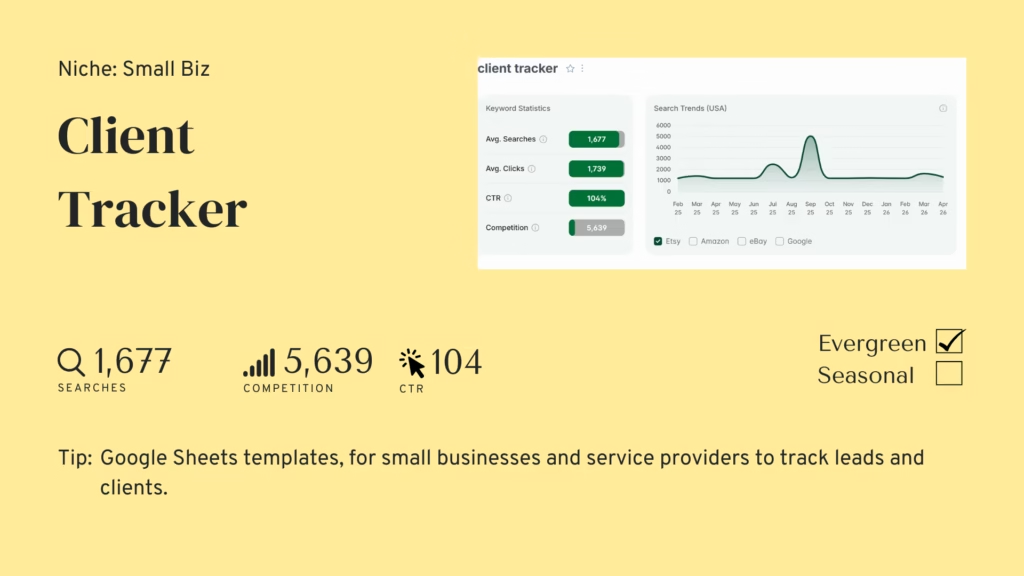
Competition: 5,639 listings | Avg Searches: 1,677 | Avg CTR: 104%
A client tracker is how a service-based small business moves from managing relationships informally to doing it with structure. Freelancers, coaches, consultants, photographers, and cleaning services all need to know who their current clients are, what stage each relationship is at, and what follow-up is due.
A Google Sheets template built around those needs is exactly what buyers searching this keyword are looking for, and at 1,677 monthly searches, there’s consistent traffic to capture.
➡️ Competition: The 5,639 seller count places this in moderate competition territory, but the search volume justifies the effort. Searches and clicks are nearly matched (1,677 and 1,739 respectively), which signals that buyers are finding relevant options and engaging with them, not bouncing out of frustration.
➡️ Average Searches: 1,677 searches a month with a trend graph that holds a strong baseline throughout the year, punctuated by a notable mid-year spike. That underlying floor of demand means a listing can perform steadily even outside peak periods.
➡️ Click-through Rate: Client tracker’s 104% CTR means clicks slightly outnumber searches in the data. For a moderate-competition keyword at this search volume, that ratio suggests the category generates more engagement activity than a single search-to-result visit, pointing to a healthy, active market.
Trending Now — Inventory Tracker
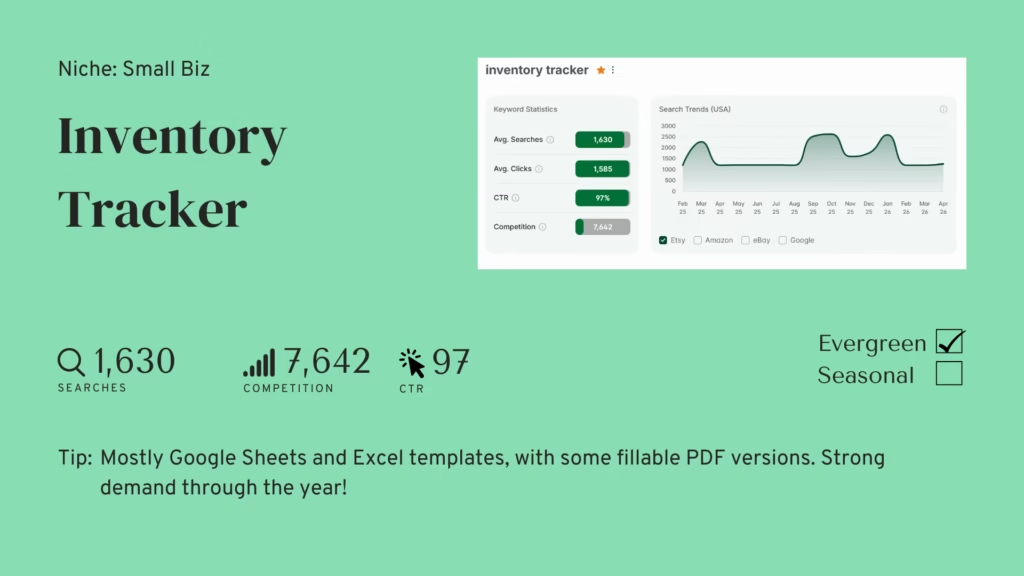
Competition: 7,642 listings | Avg Searches: 1,630 | Avg CTR: 97%
Small product-based businesses (handmade sellers, boutique owners, craft suppliers) live and die by knowing what they have in stock. An Inventory Tracker helps them avoid overselling, plan restocks, and understand which products are moving.
The buyer searching for this small business tracker has usually hit a painful moment: an out-of-stock situation that cost them a sale, or a restock order placed without reliable data to back it up.
➡️ Competition: At 7,642 sellers, inventory tracker carries the highest competition in this roundup. That number is worth taking seriously, though the demand picture is equally substantial. The product category is broad, which means differentiation by business type (handmade goods, food products, retail) still creates real separation from the majority of listings.
➡️ Average Searches: 1,630 monthly searches with a trend graph that tells the more important story: demand runs in a consistent wave pattern across the full year, with multiple peaks rather than one concentrated spike. That rhythm means there are several distinct buying moments to position around, not a single window to hit or miss.
➡️ Click-through Rate: At 97%, clicks run just below the search count, which is a tight ratio for a category with 7,642 sellers. The near-parity between searches and clicks suggests demand is well-matched to the volume of available listings, with little excess search activity going unsatisfied.
Trending Now — Sales Tracker
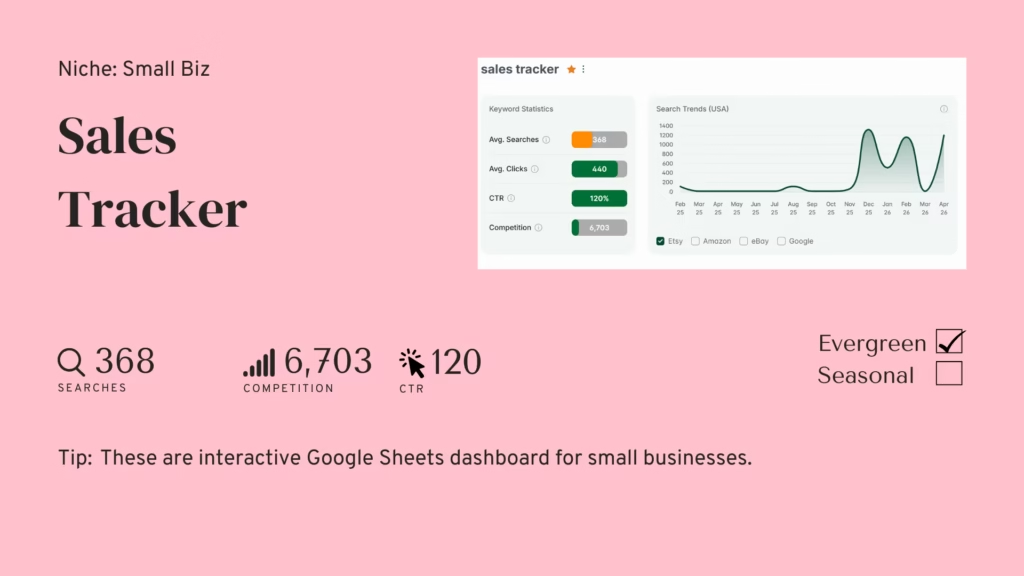
Competition: 6,703 listings | Avg Searches: 368 | Avg CTR: 120%
A Sales Tracker for a small business is part accountability tool, part planning instrument. The owner using one wants to see how revenue is trending across weeks or months, understand which products or services drive the most income, and have something concrete to look at when making decisions about what to push or pull back.
The Google Sheets dashboard format suits this use case particularly well because it can visualize the data rather than just store it.
➡️ Competition: 6,703 sellers puts this in moderate competition alongside client tracker, but the search volume is considerably lower at 368 monthly searches. That ratio requires a different strategy than the high-volume products in this post: a listing that ranks well for a more specific long-tail variation (monthly sales tracker, small business revenue tracker) will outperform one targeting the broad term directly.
➡️ Average Searches: 368 searches a month is the lowest in this roundup, but the trend graph reveals a concentrated late-year pattern with multiple sharp peaks running from around October through February. That behavior maps onto tax preparation season and year-end business reviews, when owners are suddenly motivated to understand exactly what they sold and when.
➡️ Click-through Rate: Sales tracker’s 120% CTR means clicks exceed searches by a meaningful margin. In a moderate-competition field with relatively low search volume, that ratio indicates the category produces more click activity than its headline search number suggests, which is worth factoring into how you assess the true size of the audience.
Trending Now — Invoice Tracker
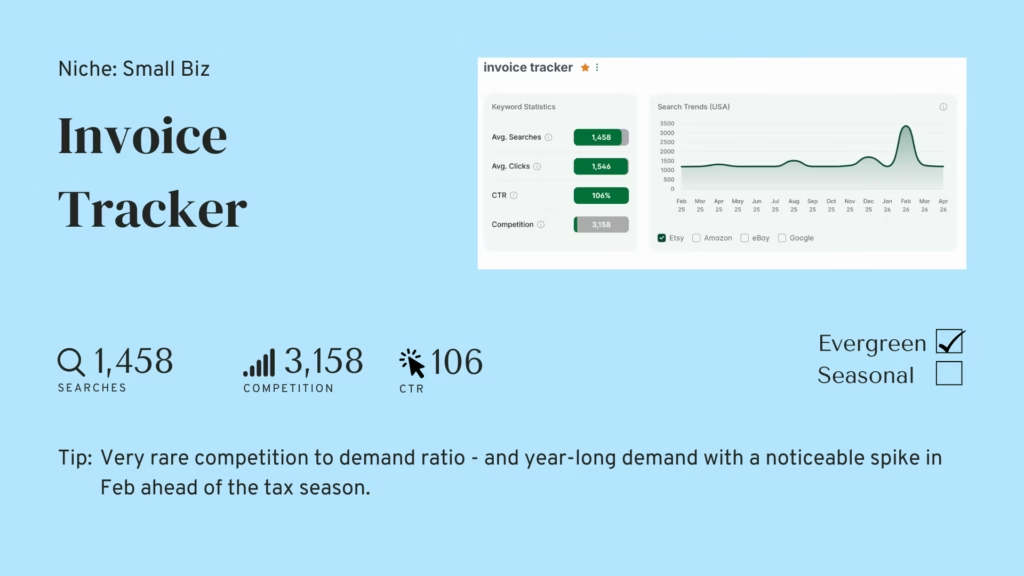
Competition: 3,158 listings | Avg Searches: 1,458 | Avg CTR: 106%
An invoice tracker is how a small business owner knows which clients have paid, which invoices are overdue, and what total revenue is outstanding at any given moment.
For a sole trader juggling ten or fifteen active clients, that visibility is not a nice-to-have feature. It’s the difference between knowing their financial position and guessing at it.
The buyer searching for this small business tracker keyword is usually dealing with the discomfort of not knowing, and they’re looking for a fast, professional fix.
➡️ Competition: This is the standout data point in this week’s roundup. At 3,158 sellers against 1,458 monthly searches, the invoice tracker keyword offers a competition-to-demand ratio that is genuinely rare for a product at this search volume. Most keywords pulling 1,400+ monthly searches on Etsy come with seller counts two or three times higher. The gap here represents a real and accessible market opportunity.
➡️ Average Searches: 1,458 searches a month with an evergreen baseline and a pronounced February spike that connects directly to tax season preparation. Business owners who have been loosely tracking invoices through the year tend to confront the problem sharply in January and February when they need accurate income records. That creates a predictable, high-urgency buying moment on top of a reliable year-round floor.
➡️ Click-through Rate: At 106%, slightly above parity, almost every search produces an opened listing. The number isn’t flashy, but in context it’s meaningful: this is a buyer with an active problem to solve, and when they find a listing that looks professional and complete, they open it to see if it handles the detail level they need.
What the Small Business Trackers Data Is Really Telling You
This week’s roundup makes the case for building a cohesive Small Business Trackers product line rather than picking a single keyword and stopping there. Client Tracker, Inventory Tracker, Sales Tracker, and Invoice Tracker all serve the same broad audience: small business owners trying to run their operation more professionally.
A seller who builds even two or three of these small business trackers creates the foundation for bundle listings and cross-shop discovery, where a buyer searching for one product encounters a shop that also has the others they need.
The single strongest opportunity in this small business trackers’ set is invoice tracker. A competition-to-demand ratio that unusual doesn’t stay unusual forever, and the February tax-season spike gives sellers who list before summer a runway to accumulate early reviews and ranking traction ahead of the biggest traffic moment. That’s the product to prioritize if you’re choosing where to put your design effort first.
Discover Trending Etsy Products Every Week!
✨ Every week, right in your inbox: get trend-backed product ideas with matching templates you can sell in minutes.
Join Tuesday Trends, and each week you’ll get:
- Real product trends based on Etsy data
- Keywords, angles, and insights that help your listings convert
- A plug-and-play PLR template to save hours on creation
These aren’t just ideas – they’re starting points for your next listing, bundle, or shop update.
👉 Start listing products your buyers are already searching for.
❓Frequently Asked Questions – Small Business Trackers
What types of small business trackers are customers looking for on Etsy?
The buyers searching for small business trackers on Etsy are typically in a moment of transition. They’ve been running their business on informal systems, and something has gone wrong often enough that they’re finally motivated to fix it. A client slipped through the cracks. An invoice went unpaid because the follow-up date got lost. A product sold out because the restock didn’t happen in time. What they’re searching for isn’t just a spreadsheet: it’s a system that gives them control and visibility over the parts of their business that currently feel unpredictable. The best-performing products in this category understand that and build toward that feeling, not just toward a set of functional cells.
Is invoice tracker a good keyword for Etsy digital sellers?
It’s one of the better small business trackers in this roundup when you factor in the competition-to-demand ratio. At roughly 1,458 monthly searches and only 3,158 competing listings, it offers far more accessible visibility than similarly popular keywords in this niche. The February tax-season spike adds a predictable high-demand window on top of steady year-round traffic. For a seller looking for a keyword with real volume and room to rank, invoice tracker is the first place to focus.
What format should I use for small business trackers?
Google Sheets is the dominant format across the keywords in this week’s post, and for practical reasons: it’s accessible from any device, auto-saves, and doesn’t require the buyer to own specific software. Excel is a strong secondary option for buyers who work in desktop environments, and offering both in a single listing is a common strategy that increases perceived value without doubling the design work. For inventory tracker specifically, some sellers add a fillable PDF version as a bonus for buyers who prefer to do physical stocktakes on paper before entering data digitally.
How competitive is the small business trackers category on Etsy overall?
It varies significantly within the category. Invoice tracker sits at just over 3,000 sellers, which is low for its search volume. Client tracker sits around 5,600, which is moderate. Inventory tracker and sales tracker both sit above 6,500, which pushes into the higher end of moderate. The takeaway for sellers is that the category as a whole is established but not saturated, and the keyword you choose matters more than the broad niche label. Specificity within a keyword, such as building for a particular business type or use case, reduces your effective competition further regardless of the headline seller count.
When is the best time to list small business trackers for tax season?
Invoice tracker shows a pronounced February spike based on the trend data in this roundup, with the climb beginning in late January. To capture that traffic with a listing that has some review history and ranking traction, the optimal time to publish is three to four months before the spike: roughly October or November. That gives the listing time to pick up early buyers during the evergreen baseline period, build social proof, and enter the February spike with enough momentum to rank visibly.
Can I bundle different small business trackers together on Etsy?
Bundling is a strong strategy in this category precisely because the buyer audience overlaps so heavily. A small business owner searching for a client tracker is often the same person who needs an invoice tracker or a sales tracker within the same quarter. A bundle listing that combines two or three complementary tracker templates at a slight premium over individual pricing often converts better than standalone products, partly because it reduces the buyer’s decision overhead (one purchase instead of three) and partly because it signals a shop with real depth and expertise. If you’re building in the small business tracker category, plan your product lineup with bundling in mind from the start.
Do small business tracker templates need to be industry-specific?
Not always, but specificity significantly affects conversion in a competitive field. A generic client tracker competes against thousands of generalist listings. A client tracker designed specifically for photographers, with columns for shoot dates, gallery delivery status, and print order follow-ups, faces a much smaller effective competitor pool and speaks directly to the buyer who knows exactly what they need. The Google Sheets format makes it relatively straightforward to create a general version and two or three niche variations from the same base design, which is a practical way to expand your small business tracker catalog without building each product entirely from scratch.
⚡Spread the Word
Thank you for reading this edition of Tuesday Trends!
If you found this valuable, please share it with other sellers who’d like to grow their printables shop, whether on Etsy or elsewhere.
Additional resources to grow your Etsy shop:
- New to Etsy? Click here to get your first 40 listings for FREE.
- Trending PLR templates with resell rights
- Start selling on Etsy with this free guide.
- Create your own digital products to sell
- Brand your printables with these free mockup templates
- Speed up your Etsy listings
- Grow your Etsy shop faster – and make more per sale!
- Use this tool to find trending products with low competition
- Learn how to how to capitalize on seasonal trends for digital products
- Book a free call with Dylan Jarhaus, a six figure Etsy Seller
